Shan Shen Bu AI Prompts That Keep the Face and the Moves
 Shan Shen Bu AI Team
A six-part prompt formula for shan shen bu AI video: subject, scene, four-beat action, camera, identity lock and exclusions, with four full examples.
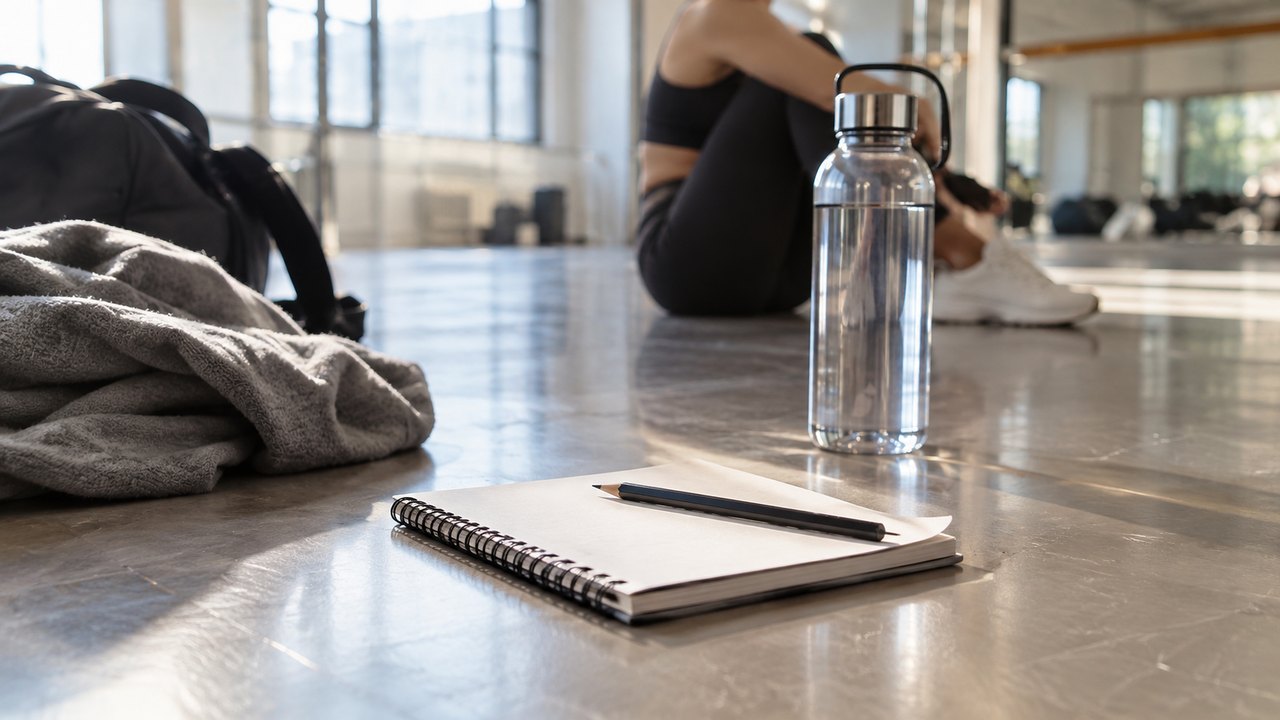
Most disappointing shan shen bu renders are not model failures. They are prompt failures. The model does what the prompt describes, including the vague parts. If the prompt says "does the shan shen bu dance," the model picks its own version of the routine, its own camera and its own idea of who is on screen. If the prompt names all four beats, the camera, and what to preserve from the photo, most of those choices disappear.
This guide gives you a six-part formula, four complete prompts for different scenes, and a table for diagnosing a render that drifted. It assumes you already have a photo or a scene in mind. If not, the workflow guide covers that first.
Beispiel geladen – bearbeiten oder generieren.
This clip: 30 credits · 11 clips a month for $39.90 (Pro), or 120 a year for $319
The six-part formula
Write the prompt in this order. Each part has one job, and short beats clever.
| Part | What it does | Example phrase | | ------------------- | ----------------------------------------------- | --------------------------------------------------------- | | 1. Subject | Names who is on screen | "One adult woman in a black T-shirt and jeans" | | 2. Scene | Fixes the location and the light | "A plain office corridor with soft overhead light" | | 3. Four-beat action | Describes the routine in order | "First a sideways dodge... then a knee-lift kick..." | | 4. Camera | Stops the model from inventing cuts | "Fixed phone camera at chest height, one continuous take" | | 5. Identity lock | Tells the model what to preserve from the photo | "Keep the exact face, hair, skin tone and outfit" | | 6. Exclusions | Removes common artifacts | "No text, no watermark, no duplicate limbs" |
Subject. Say how many people, their approximate age, and their clothes. If you attach a photo, keep this short; the photo already carries most of the detail. If you are writing from scratch, this is where you cast the performer.
Scene. One location, one light quality. "A bright dance studio" is enough. "A studio, then a street, then a rooftop" is three scenes in a ten-second clip, and the model will handle the transitions badly.
Four-beat action. Name each beat and connect them with "then" so the order is explicit. Use the same names every time: flash step, langzi kick, bear shake, head sway. Add the deadpan only at the end, because a deadpan face during a kick reads as stiffness rather than comedy.
Camera. A fixed camera at chest height is the safest choice. It keeps the full body in frame and avoids the wobble that makes AI clips look synthetic. If you want a slow push-in, ask for one and accept that the background may shift.
Identity lock. This is the part people skip. It is also the part that decides whether the clip looks like you or like a stranger who borrowed your haircut. Repeat it in plain words: same face, same proportions, same hair, same outfit, do not swap faces.
Exclusions. Keep the list short and specific. Text, watermark, duplicate limbs and extra people cover most of the common problems. A list of twenty exclusions tends to dilute the ones that matter.
The four-beat action, written out
Here is the action block on its own, so you can paste it into any prompt:
The subject performs the shan shen bu routine in four clear beats: first a sudden sideways dodge, stepping the feet wide apart and dropping low before springing back to center; second a langzi kick, lifting one knee and kicking the foot out to the side while the opposite arm swings across the body; third a bear shake, both arms flinging up and outward while the shoulders and whole body shake; fourth a deadpan head sway that ends with a direct look into the camera.
That paragraph is the backbone. The other five parts wrap around it.
Example 1: blue dance studio
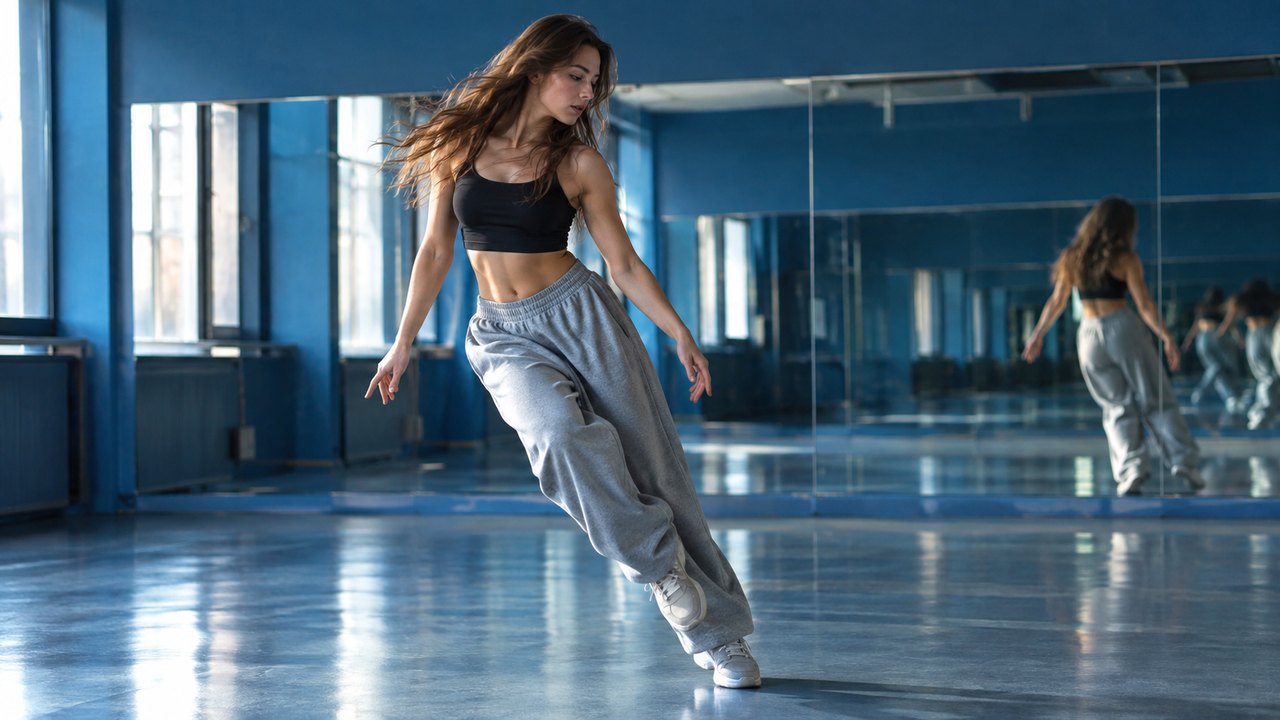
A bright blue mirrored dance studio with a wooden floor and a ballet barre along one wall. One adult performer in casual clothes does the shan shen bu routine in four clear beats: a sudden sideways dodge with the feet wide, dropping low and springing back; a knee-lift side kick with the opposite arm swinging across; both arms flung up for a full-body shake; then a deadpan head sway and a look into the camera. If a reference photo is attached, keep the exact face, hair, skin tone, body type and outfit, and do not swap faces. Fixed phone camera at chest height, one continuous take, vertical 9:16, natural studio light, no text, no watermark, no duplicate limbs, no second person.
Use this when the dance itself is the point. The mirror wall gives the model a stable background, and the blue light hides small skin-tone errors better than a plain white room.
Example 2: office corridor
A plain open-plan office corridor with desks, monitors and a colleague walking past in the background. One adult in office clothes does the shan shen bu routine: a fast sideways dodge out of the path of someone walking by, feet wide and low, then a knee-lift side kick with the opposite arm swing, a full-body bear shake with both arms up, and a deadpan head sway that ends with a look into the camera, as if nothing happened. If a reference photo is attached, keep the exact face, hair and outfit. Fixed phone camera at chest height, one continuous take, vertical 9:16, no text, no watermark, no logos, no second person in focus.
The comedy depends on the trigger. "Out of the path of someone walking by" gives the dodge a reason. Without it, the move looks like a random dance in a corridor.
Example 3: night street
A quiet city street at night, wet pavement, neon signs out of focus in the background. One adult in a dark jacket performs the shan shen bu routine: a sharp sideways dodge with a wide low stance, a knee-lift side kick with the opposite arm across the chest, both arms thrown up for a full-body shake, then a slow deadpan head sway and a direct look into the camera. If a reference photo is attached, preserve the exact face, hair, skin tone and outfit. Fixed camera at chest height, one continuous take, vertical 9:16, cinematic but realistic lighting, no text, no watermark, no duplicate limbs, no crowd.
Night scenes look dramatic and hide background detail, which is useful when your photo was taken somewhere plain. They also make faces harder to keep consistent, so use a sharp, front-lit photo.
Example 4: courtyard duo
A sunlit stone courtyard with a low wall and green plants. Two adults in different outfits perform the shan shen bu routine side by side in sync: a sideways dodge with a wide stance, a knee-lift side kick with the opposite arm swing, a full-body shake with both arms up, then both heads sway and both look into the camera with a deadpan face. If the reference photo has one person, add one friend in a different outfit; if it has two, keep both identities exactly. Fixed camera at chest height, one continuous take, vertical 9:16, no text, no watermark, no extra people.
Two-person renders are less stable than solo ones. Keep the camera fixed, keep both people in frame from the start, and avoid anything that makes the model swap the two faces.
What to change when a render drifts
Change one line at a time. If you change the photo, the scene and the length together, you will not know which one fixed the problem.
| Symptom | Likely cause | Prompt fix | | -------------------------------- | ---------------------------------------------------- | ------------------------------------------------------------------------------------- | | The face changes during the clip | Identity lock is missing or the photo is soft | Add "keep the exact face and proportions, do not swap faces" and use a sharper photo | | Only two beats appear | The action block is buried or too long | Move the four beats earlier and cut extra adjectives | | The kick turns into a jump | Beat two is underspecified | Write "one knee lifts, the foot kicks to the side, the opposite arm crosses the body" | | Arms stay down during the shake | The shake is described as a shoulder movement | Add "both arms fling up above shoulder height" | | The head sway becomes nodding | "Head movement" is too vague | Write "slow side-to-side head rock, deadpan face, final look into the camera" | | A second person appears | The photo has bystanders or the prompt says "people" | Add "alone in frame" and crop the photo to one person | | The background changes mid-clip | Camera movement or a busy scene | Ask for a fixed camera and a plain background | | Hands merge into the body | Fast movement close to the torso | Keep the arms away from the chest during the shake |
If a render fails twice with the same prompt, simplify rather than add. Remove the camera move, shorten to ten seconds, and use a plainer scene. A clean ten-second clip beats an ambitious fifteen-second one that falls apart at the kick.
Habits that hurt prompts
- Stacking actions. Five verbs in ten seconds means the model drops two and rushes the rest.
- Vague dance words. "Dance wildly" or "do a cool move" gives the model nothing to lock onto.
- Naming real people. Do not prompt a celebrity or the original instructors. It is against the site rules, and it produces a worse likeness than a photo does.
- Contradictory camera notes. "Close-up" and "full body" cannot both be true.
- Long exclusion lists. Ten "no" clauses dilute each other.
A note on identity and permission
Use your own photo, or a photo of someone who has agreed to appear. Do not upload a colleague's picture, a stranger's profile photo, or an image of a public figure. Text-to-video avoids the problem entirely: with no photo attached, the model casts a generic adult performer and no real identity is involved.
Every generated clip is a performance, not a recording. Label it as AI when you post it, and do not present it as real footage.
FAQ
Do I need a photo to use these prompts?
No. All four examples work without one. With no photo attached, the model casts a generic adult performer in casual clothes instead of copying a specific person.
How long should a prompt be?
Between 70 and 130 words is a practical range. Long enough to name the subject, scene, four beats, camera and exclusions. Short enough that no single instruction gets lost.
Why does the model ignore my last sentence?
Usually because the prompt has too many competing instructions, not because the last line is cursed. Move the exclusions next to the camera line and cut one action you do not need.
Can I use a prompt I found on TikTok?
You can read it for ideas, but write your own. Copied prompts often assume a specific photo, a specific scene or a specific model version, and they rarely transfer cleanly.
Write your first prompt
Start from the text-to-video feature page, paste the four-beat action block, and add your own scene. The AI dance guide explains how the model handles photos versus prompts, and the pricing page lists what each render costs. When you are ready, open the studio on the home page and test one prompt at a time.
Verwandte Anleitungen
What Is Shan Shen Bu? Meaning, Origin and the Four Moves
Shan shen bu means flash step: a four-beat Chinese dance routine that went viral in 2026. Here is where it came from and what AI can and cannot do.
How to Make a Shan Shen Bu Video From One Photo
Turn one clear photo into a 10 to 15 second vertical shan shen bu clip. The full eight-step workflow, a photo checklist and the failures to expect.
Shan Shen Bu AI Dance: Photo or Text to a 10-Second Clip
How photo-to-video and text-to-video differ, what the model keeps, and the real credit math for a 10 to 15 second shan shen bu AI dance clip.